Apple Betty is an old-fashioned dessert that we don't hear a lot about these days. I think that is sad, because Apple Betty is quick, easy, and tasty. What more could a person want? I am not sure why recipes for Apple Betty have fallen off of today's radar, but recipes can be found online and in church cookbooks and vintage cookbooks.
Another name for this dessert is Apple Brown Betty.Here are a few facts about Brown Betty that I found at Wikipedia:
"A Brown Betty is a traditional American dessert made from fruit (usually apple, but also berries or pears) and sweetened crumbs. Similar to a cobbler or a bread pudding, it consists of a baked pudding made with layers of sweetened and spiced fruit and buttered bread crumbs. It is usually served with a lemon sauce or whipped cream.
The dish was first mentioned in print in 1864.[1] A recipe from 1877 uses apple sauce and cracker crumbs.[2]
Apple Brown Betty was one of the favorite desserts of Ronald and Nancy Reagan in the White House.[3]
Peggy Hill from the show King of the Hill likes to make apple brown betty."
Apple Betty is similar to a crisp, but it does not have oats in the topping. It is also similar to a cobbler, but the topping does not rise like a biscuit. Served cold or warm with milk, cream, or ice cream, Apple Betty has the essence of pie without the bother of making a crust. Here is my version, why not give this fall treat a try?
Apple Betty
4 cups of baking apples*, sliced
1/4 cup apple cider
3/4 cup flour
1 cup sugar
1/2 teaspoon cinnamon
1/4 teaspoon nutmeg
2 tablespoons butter
Place sliced apples in a lightly greased pie pan.
Pour cider over the apples.
Combine flour, sugar, cinnamon and nutmeg in a mixing bowl.
Cut in butter with 2 knives until mixture is crumbly.
Place crumb mixture over apples.
Bake at 375 degrees for 45 minutes or until apples are tender.
Do you have bread that is getting dry? This Apple Betty recipe from about.com uses bread crumbs instead of flour. I do have bread to use up, so I am going to grate it into crumbs to see if I like this recipe as well as I do my "Tried and True".
*Cortland, Granny Smith, Jonathan, and Yellow Delicious are good choices for this dish (or a combination of several).
Marcheta *Betty's Friend

Tuesday, October 1, 2013
Saturday, September 28, 2013
Making Apple Cider, Part 4
“It's time to walk to the cider mill
Through air like apple wine,
And watch the moon rise over the hill,
stinging and hard and fine.”
~ Stephen Vincent Benét, John Brown’s Body
Through air like apple wine,
And watch the moon rise over the hill,
stinging and hard and fine.”
~ Stephen Vincent Benét, John Brown’s Body
Part 4
Thirty bushels of apples have been picked, sorted, loaded, driven to the cider mill, unloaded, washed, chopped, mashed, and squeezed. Their dry innards have been fed to cows. What's left?
Why, the good part, that's what!
Every drop of juice gets piped to a large holding tank that is fitted with a row of spigots.
Bottling (or in this case, jugging) the cider is not quite as hairy of a chore as the one Lucy and Ethel faced with trying to keep up with boxing chocolates, but it does take a certain rhythm and several people to do the job efficiently. The good part about it is that if for some reason a person gets behind, say in capping for instance, each individual spigot can be opened and closed when needed. Jim never likes to be idle, so he generally helps bottle the cider.

Remember the big crates? Now empty of apples, it begins to fill with the finished product.

The jugs get rinsed off before adding another layer. When the order has been completed, the crate is then hauled back to the loading dock, and each jug has to be taken out and placed in the crates that we used for bringing the apples to the mill.

The 30 bushels of apples are now 112 gallons of fresh, sweet apple cider. All that is left for us is to hustle to get it sold. Some of our loyal customers have been with us from the start and, to them, getting their "Gibson Cider" means that Autumn is truly here. I am so thankful for them, as well as our newer customers and, of course, NorthSide Farmers Market. Our work would not be possible without them.
If you think that I am done blabbing about cider...better think again! Sure, apple cider is delicious as is, but it does not need to stop there. The next post will give recipe ideas.
Marcheta *...work is never done, never done.....

Friday, September 27, 2013
Making Apple Cider, Part 3
“He Looked and smelt like Autumn's very brother, his face being sunburnt to
wheat-colour, his eyes blue as corn-flowers, his sleeves and leggings dyed with
fruit-stains, his hands clammy with the sweet juice of apples, his hat sprinkled
with pips, and everywhere about him the sweet atmosphere of cider which at its
first return each season has such an indescribable fascination for those who
have been born and bred among the orchards.”
Thomas Hardy, The
Woodlanders
Part 3
Finally, the apples are ready to be "pressed". In this installment, you'll see exactly how it is done and why it is called "pressing".

The apples have been washed and chopped into a pulp. The next station has large bottomless trays which are lined with a thick heavy cotton. As the pulp is piped into the tray, Anthony Meyers moves the hose back and forth to fill the tray to brimming with the golden mash.

When a tray is full, Anthony folds the ends of the cloth over the pulp and adds another tray. When he has enough trays filled, they are moved to the pressing machine.

2000 pounds of pressure force the deep amber juice from the apples. The juice is piped into a holding tank, where it is treated with UV light. This is our preferred method for assuring that e-coli and its buddies are killed without affecting the taste or quality of the cider.

After every drop possible has been pressed from a stack of trays, Anthony removes them from the press and dumps the pulp into a dumpster. This, again, is heavy work. The pulp is very dry and reminds me of clumps of sawdust. Unlike sawdust, the pulp is a powerhouse of nutrition. And like sawdust, it will not go to waste, there are other uses for it.....
 |
| Add caption |
OK, the juice has been pressed from the apples and the cows are fed. Is it time to relax with a nice tall glass of fresh sweet cider or a mug of hot mulled cider?
Nope.
Not quite yet.
Stay tuned.....
Marcheta * ready to relax
Thursday, September 26, 2013
Making Apple Cider, Part 2
“I heard a sound as of scraping tripe, / And putting apples wondrous ripe, / Into a cider- press's gripe.”
Robert Browning
Apple cider has always been a popular beverage, but let's face it; cider did not have to compete with the likes refreshing soft drinks, like colas. Never fear: these days, consumer demand for natural and organic food makes pure apple cider more popular than ever.
Today's post explains the first steps the cider mill took in processing our order.

We had too many apples for the large crate, but not enough to mess with filling another. The extra apples were stacked on top of the load to be transported to the cider making area.

The bags and crates were hand-loaded into the conveyor.

Next, a hydraulic lift tilted the large crate to unload it. As the apples are being moved from the crate to the conveyor, a worker stands by to remove things like leaves or large stems.
Notice that the workers wear ear protection. The noise from the machines can get as loud as a rock concert!

The apples are collected into a large metal cage, where a stream of water washes away any debris. Then the apples go into a massive chopper.
At this point, the apples are "half way there" in their transformation from solid to liquid. Tomorrow's photos will show how it is done.
Marcheta *step-by-step
Wednesday, September 25, 2013
Making Apple Cider, Part 1

Apple cider is a pure drink that has only one thing listed on the ingredient label: apples.
Lots of apples.
It takes a full bushel of apples to make three gallons of cider.
Lots of different kinds of apples.
Each apple variety lends its own special characteristic and flavor to the cider. At least three different types of apples are needed to get a good tasting blend.
The apple cider making process begins in the orchard, of course. Apples for cider are usually the ones that are not "pretty" enough or large enough to sell for eating/baking/cooking. After picking apples, we sort the ones for cider into old-fashioned wood crates, which we are slowly replacing with modern plastic crates as we find them at reasonable costs.
Why? After all, the wood crates work just fine and lend a traditional touch to this very traditional practice of making cider. Plastic crates are lighter weight, which is a huge plus for the person loading 30 or more crates of apples. The plastic crates are much easier to clean, and they stack perfectly on each other. And, the big bonus is that the plastic crates are standardized to hold four 1 gallon jugs or nine 1/2 gallon jugs. These factors add up to making transport and delivery much easier. Who wouldn't go for that? But still, I do like our wooden crates...some have been in service to us for 40 years. Can you believe that? I am amazed each time that I realized that 40 decades have passed since Jim and I said "I do" on September 22, 1973!
On a brisk September morning under a brilliant blue sky, Jim and I loaded up a pick-up truck with 30 bushels of apples, using both wooden and plastic crates as well as a few bushel baskets and even several feed sacks stuffed full of apples. Folks, let me tell you, that is a job in itself, apples not exactly being light-weight :)
The apples that went into this batch of cider were Cortland, Jonathan, Golden Delicious, and Red Delicious.
The next step in the process is the drive to the cider mill. State requirements for selling apple cider have resulted in many small cider mills going out of business. To sell cider, it has to either be pasteurized or treated with UV light, which kills e-coli and 5 other pathogens by skipping the boiling process. Boiling does affect the taste of cider, so we opt for UV, which keeps the cider "alive".

Gone are the days when we could have several choices of having the apples "pressed" at mills within a few miles of our orchard. Now we must venture to Huron County, Ohio, to a state approved facility owned by the Meyer family. The drive takes a little over an hour through scenic Ohio countryside, so I don't mind it too much.
By the time we arrived a the mill, the sky was filling up with clouds and the air took a turn for the colder, which is perfect for making cider, as heat is its enemy.
We backed our truck to the receiving area, where our apples were off-loaded from our truck and put in huge bins fitted for fork-lift machines. The one used for our cider was man-powered.
In this picture, Jim and Anthony Meyers, owner of the mill, move our apples into the massive crate.
Already a lot of work (months of taking care of the orchard, picking, and sorting apples, loading them and trucking to the mill, unloading the multi-colored fruit into the huge bin) has gone into making the cider. But the journey has just begun. Stay tuned to this blog for Part II tomorrow's juicy details :)
Marcheta *detailer
Tuesday, September 24, 2013
Bushels and Barrels of Fun

Yesterday we took about 30 bushels of apples to Meyer's Cider Mill in Huron County, Ohio, and came home with 88 full gallons and 51 half gallons. That's a lot of apples and a lot of cider! No, the cider was not put in wooden barrels, like the ones in the cider mill's yard, but in modern plastic jugs. Ah, plastic! Not as nostalgic as wooden barrels, but an easy and safe way to deliver the fresh, healthy liquid, so I am thankful for it.
Yesterday was a lot of work, for sure, but today is the busiest day of the week for me. I have to hustle around, sorting apples and loading them and the cider in my car to set up at today's NorthSide Farmers Market.
It's a great day for working outside. The cool air has crisped up a clear blue sky, which is a perfect backdrop for leaves that are just beginning to dress in their autumn colors. The breeze has a few sharp edges, but overall, it is cool, calm, and collected. Which is how I'd like to be able to describe myself, but it is no use. When I am working on any kind of deadline, I cannot relax until I know that I've got everything done. On market days, this usually means that about 5 minutes before the opening bell I am finally able to relax and enjoy the process of growing food for the people in my community :)
Tomorrow I'll start posting photos that illustrate the step-by-step process of turning solid fruit into liquid refreshment.
Marcheta *doing the hustle
Saturday, September 21, 2013
Noel's Easy Apple Cake
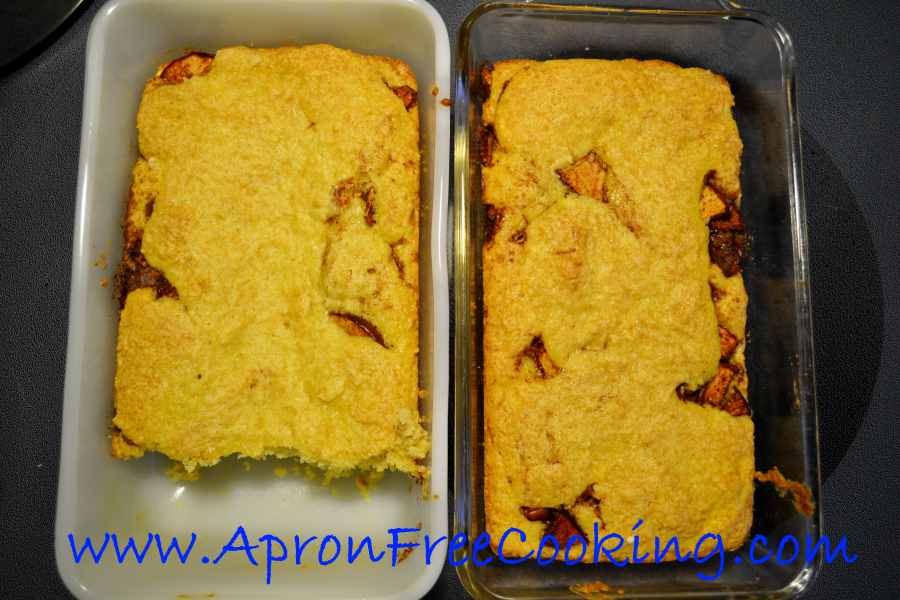
For today's post, I went over to www.apronfreecooking.com and snatched Noel's apple cake recipe. With bushels of apples on the porch, more in crates in the orchard, and even more apples on the trees waiting to be picked before they tumble to the ground, I am always looking for easy apple recipes to use those babies up. Noel's recipe is super easy because the base is a packaged cake mix.
Marcheta *simplicity
Apples have an appeal that goes beyond the flavor. Apples bring to mind images of fall and family activities. Many families make a day of going to pick apples from the orchard and then spend another day making pies and applesauce.
I’m partial to my mom’s apple pie, and since I don’t come close to matching it, I don’t even try. I do however, like to try apple recipes to find new ways to use the fruit.
1 cup applesauce
1 large egg
¼ cup brown sugar
1 tsp cinnamon
1 apple
Preheat oven to 350 degrees Fahrenheit. In a bowl, mix the applesauce, egg and cake mix with a wooden spoon until completed mixed together. In a small bowl, dice the apple and mix with the brown sugar and cinnamon. Toss the apple bits until completely coated with the brown sugar and cinnamon. Prepare two loaf pans with a light coating of cooking oil. Spread a quarter of the cake batter in each loaf pan. Sprinkle the apple and sugar mixture over the cake batter. Top the apples with the remaining cake batter – a quarter in each pan. Bake at 350 degrees for 35-40 minutes or until a toothpick inserted comes out clean.
Marcheta *simplicity
Apples have an appeal that goes beyond the flavor. Apples bring to mind images of fall and family activities. Many families make a day of going to pick apples from the orchard and then spend another day making pies and applesauce.
I’m partial to my mom’s apple pie, and since I don’t come close to matching it, I don’t even try. I do however, like to try apple recipes to find new ways to use the fruit.
Easy Apple Cake
Easy Apple Cake
1 (18 oz) yellow cake mix1 cup applesauce
1 large egg
¼ cup brown sugar
1 tsp cinnamon
1 apple
Preheat oven to 350 degrees Fahrenheit. In a bowl, mix the applesauce, egg and cake mix with a wooden spoon until completed mixed together. In a small bowl, dice the apple and mix with the brown sugar and cinnamon. Toss the apple bits until completely coated with the brown sugar and cinnamon. Prepare two loaf pans with a light coating of cooking oil. Spread a quarter of the cake batter in each loaf pan. Sprinkle the apple and sugar mixture over the cake batter. Top the apples with the remaining cake batter – a quarter in each pan. Bake at 350 degrees for 35-40 minutes or until a toothpick inserted comes out clean.
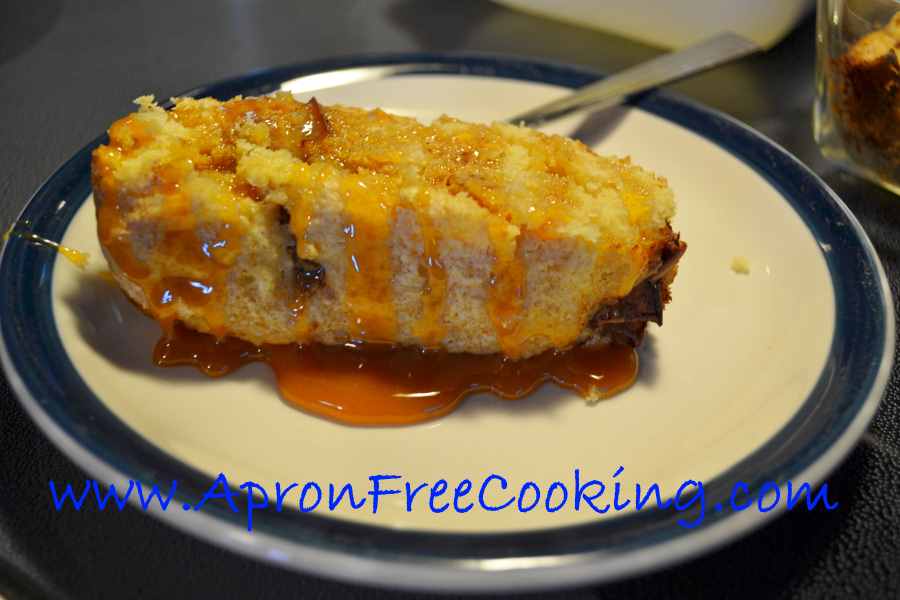
Apple Cake Serving with Caramel Topping
Friday, September 20, 2013
How D'Ya Like Them Apples?

Here's a look at what my market stand "sometimes" looks like. Usually I have the tables covered, but the covers were being used for a photography display at The Cracked Pot store in Galion.
Also, last week was an "off" week for cider.
But the thing is, not only do I help in picking these apples, I have to look at each one while sorting. That's a WHOLE LOT of decisions to make! No wonder that my brain stays fried during harvest season...LOL.
Marcheta *yep. yep. yep. nope. yep.
Thursday, September 19, 2013
To Everything There is a Season
And right now, the 'things' in my season are apples and pears. LOTS of apples and pears!

Today I am turning "ugly" fruit into side dishes. I have several baskets of pears and apples that are below quality of what I can sell, but are too good to pitch out for the wildlife to enjoy (as do the extremely sub-par fruit).
"There are only ten minutes in the life of a pear when it is perfect to eat." - Ralph Waldo Emerson
I have to agree with Mr. Emerson; since pears can go bad very quickly, I chose to work with them first. And, as usual, I did not have any kind of plan in mind, other than knowing that I did not want to can them. Chunky pear/apple sauce came to mind. I changed that mind when I began peeling the pears because I thought that they look rather nice and can hold their own in the taste department.
After washing, peeling, and chopping the pears, I cooked them for a short while. I added a splash of apple cider to get the cooking started. Just before the pears were done I mixed in a tablespoon of mulling spices (which includes sugar). Other options that could work is to leave the pears alone or add a dash of cinnamon with a couple of teaspoons of sugar or honey.
When the pears were cooked, I put them in freezer containers. They are cooling on the counter before heading for the freezer shelves. When snow flies, these pears will be a nice reminder of this glorious autumn. I'll be thankful for the harvest, and as I am lazing about during long winter nights, I'll also be thankful that the harvest season is over.
Marcheta *seasoned
Wednesday, September 18, 2013
National Symbols

Here are a few of the wild turkeys that we see a few times each day when they come to wet their whistles at our nature pond. So far, they keep me at a distance and I haven't been able to get a very good picture of them. Who says that turkeys aren't smart?

Later, at the reservoir, I saw a Bald Eagle. It was up high and moving fast. Even though my pic of it isn't fantastic, it is my personal best to date.
Seeing turkeys and Bald Eagles within an hour seems significant, somehow. Benjamin Franklin wanted the turkey to be our national symbol. I do like them, but I am glad that the majestic eagle won out. When I watch one soar to great heights; when I think of how keen their senses and natural instincts are, I agree that the Bald Eagle is the perfect symbol of what our forefathers had in mind for our nation.
Marcheta *bird lover
Subscribe to:
Posts (Atom)